Drywall
Drywall
Drywall, also known as plasterboard or gypsum board, is a versatile construction material commonly used for the finishing of interior walls and ceilings. Let’s explore how drywall works and its significance:
Composition and Manufacturing:
- Core Material: Drywall consists of a core made of gypsum, which is a sulfate mineral composed of calcium sulfate dihydrate.
- The gypsum core is sandwiched between two layers of paper or fiberglass.
- Additives are mixed with the gypsum to enhance properties such as fire resistance, durability, and ease of installation.
Advantages of Drywall:
- Quick Installation: Drywall is quick and easy to install, making it a popular choice for construction projects.
- Durability: It is incredibly durable and can withstand everyday wear and tear.
- Simple Repairs: When damaged, drywall requires only simple repairs.
- Fire Resistance: Drywall helps contain the spread of fire, allowing safe evacuation during emergencies.
History:
- The U.S. Gypsum Company (USG) invented drywall in 1916.
- Originally called “Sackett Board,” it was later sold as multi-layer gypsum and paper sheets.
- Drywall replaced traditional plaster, offering faster installation and cost savings.
Installation Process:
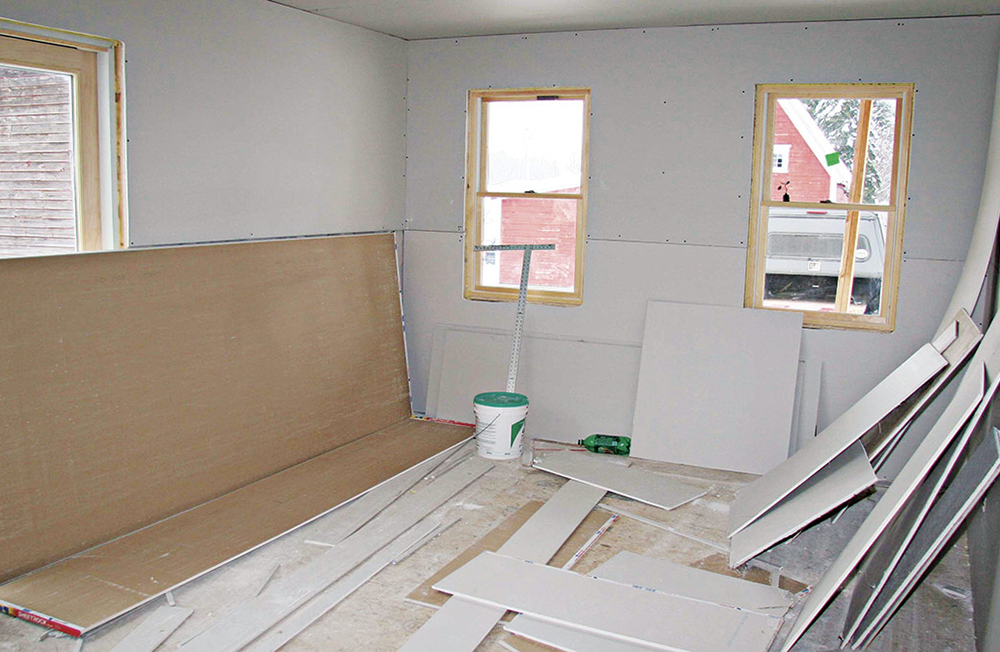
- Drywall sheets are cut to size and installed on walls and ceilings.
- Joint compound (also known as mud) is applied along seams, and drywall tape is placed over the joints.
- The process involves several layers, including the tape coat and subsequent finishing coats.
Applications:
- Drywall is used for interior walls, ceilings, and various design features.
- It conceals steel beams, wraps columns, and provides fire resistance.
- Drywall is a universal building material due to its efficiency and versatility.
Remember that drywall revolutionized interior construction, offering a faster, more cost-effective alternative to traditional plaster. It’s a fundamental part of modern buildings!